Buying a home in Manhattan Beach means buying into about 3.9 square miles, 2.1 miles of beach, one public school district, and property taxes of roughly 1.1% to 1.2% of your price. Those are the fixed facts. Everything else about buying here depends on which few blocks you end up on, and that part I can actually help with.
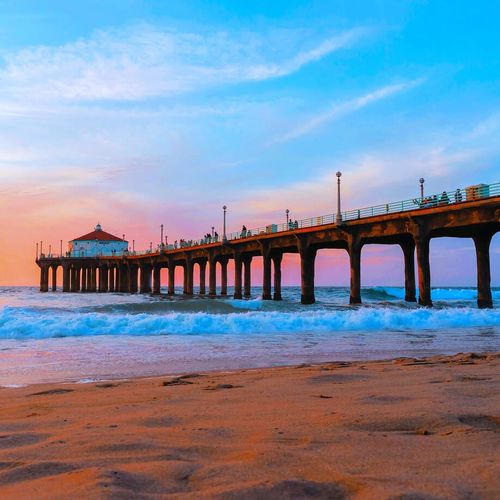
Maybe you've already done the visitor version of this town. You walked the pier out to the Roundhouse Aquarium, got coffee on Manhattan Avenue, watched a pickup volleyball game on the courts by the pier, and maybe tried the dune at Sand Dune Park on Bell Avenue before learning that anyone 13 and older needs a reservation to climb it. The resident version is a different place. It's Veterans Parkway at seven in the morning with the dog walkers and the strollers. It's the line of cars on Artesia Boulevard when Mira Costa lets out. It's Polliwog Park on a Saturday, the Tuesday farmers market, and figuring out which alleys you can actually park in.
I've been selling homes across the South Bay for a long time, and I've watched a lot of people buy in Manhattan Beach. The ones who end up happy are rarely the ones who won the first bidding war they entered. They're the ones who knew which Manhattan Beach they were buying before they started writing offers. Below are the ten steps I'd walk you through, in order, with the local details that don't show up on a national checklist. Think of it as the conversation we'd have if you stopped me on Manhattan Avenue and asked where to start.
The Short Version: 10 Steps to Buying a Home in Manhattan Beach
To buy a home in Manhattan Beach, choose your section of town first, get fully underwritten for a jumbo loan, budget for costs beyond the price, then bid from block-level comps with your inspection contingency intact.
- Decide which Manhattan Beach you're buying
- Get fully underwritten, not just pre-qualified
- Budget for what comes after the price
- Choose a buyer's agent and put it in writing
- Learn the comps for your block, not the city
- Tour houses like an owner, not a guest
- Write an offer the seller can trust
- Use your inspection window fully
- Get through escrow, appraisal, and title
- Close, then do the paperwork most people forget
What Does It Cost to Buy a Home in Manhattan Beach Right Now?
The median sale price for a single-family home in Manhattan Beach was [MLS: median SFR sale price] in [MLS: quarter, 2026], based on closed sales in the MLS. Condos and townhomes, mostly in El Porto and around Manhattan Village, are the lower-cost way in, with a median of [MLS: median condo/townhome sale price] over the same period.
If you only look at two rows, look at days on market and the share selling over asking. Those two tell you how hard you'll need to write your offer far better than the median does. One more thing about that median: Manhattan Beach is a small market, so a handful of large Strand or Hill Section sales in a given month can push it up or down sharply without anything changing on your street.
Step 1: Decide Which Manhattan Beach You're Actually Buying
Manhattan Beach is really four or five different towns sharing one zip code, and choosing your section before you tour anything is the single decision that saves the most time and money.
Each part of town trades something for something else. The usual advice is to get as close to the sand as you can afford. I don't always agree with that. I've seen buyers stretch for a walk street, then spend years wishing they had a yard, a garage that fits two cars, and a street their kids could ride bikes on.
- The Sand Section and the walk streets: closest to the water, smallest lots, front doors on a pedestrian path with the garage out back on an alley.
- The Hill Section: elevation is the product here, and ocean views change value from one side of a street to the other.
- The Tree Section: the streets named for trees, generally bigger lots than the Sand Section, and the area many families settle into once they've done the beach-cottage chapter.
- East Manhattan Beach, Liberty Village, and Manhattan Village: east of Sepulveda, more space for the money, closer to Polliwog Park, and a short drive to everything.
- El Porto: the north end by Rosecrans, surf culture, mostly condos and townhomes, and the Chevron refinery in El Segundo as your northern neighbor.
That last one deserves an honest word. El Porto is the most affordable way to live a block from the water in this town, and plenty of people love it. Some buyers don't mind the refinery at all. Others visit once at night, see the flare stacks, and cross it off. Go at the time of day you'd actually be home before you decide.
Once you've narrowed it to a section or two, browse current Manhattan Beach homes for sale filtered to just those areas. It's a much shorter and more useful list. If you're torn between two sections, I compare the Sand, Tree, and Hill Sections side by side in my guide to the best Manhattan Beach neighborhoods for buyers.
Step 2: Get Fully Underwritten, Not Just Pre-Qualified
Most Manhattan Beach purchases need a jumbo loan, so get your file fully underwritten by a lender before you tour, because a basic pre-qualification letter carries very little weight with sellers here.
A jumbo loan is any mortgage above the conforming loan limit for Los Angeles County, and at Manhattan Beach prices that describes nearly every financed purchase. Jumbo lenders look harder at reserves, income documentation, and debt. That review takes time, and you want it done before you find the house, not during the ten days you have to remove contingencies.
- Ask for a full credit and income review, sometimes called a TBD underwrite.
- Expect jumbo lenders to want proof of reserves after closing, often several months of payments.
- If you're selling another home to buy here, talk to your lender about bridge financing early.
- Get a lender who answers the phone on a Saturday.
That last bullet sounds like a joke. It isn't. When a listing agent calls your lender to check that you're real, the lender who picks up in the first hour often decides which offer gets accepted.
Step 3: Budget for What Comes After the Price
Your Manhattan Beach property tax will start at roughly 1.1% to 1.2% of your purchase price each year, plus fixed parcel assessments, and a separate supplemental tax bill usually arrives within months of closing.
California's Proposition 13 sets the base rate at 1% of assessed value, and your purchase price generally becomes your new assessed value. Local voter-approved bonds and assessments push the total rate above 1%, and Manhattan Beach also has a parcel tax for its schools. After that, your assessed value can rise by no more than 2% a year as long as you own the home.
The supplemental bill is the one that catches people. Your seller paid taxes based on their old assessed value, and the county bills you separately for the difference between that and your purchase price for the rest of the tax year. On a Manhattan Beach purchase, that can be a large number, and it doesn't come through your mortgage impound account.
- Property tax: roughly 1.1% to 1.2% of price, plus parcel assessments.
- Supplemental tax bill after closing.
- Homeowners insurance, and get real quotes early, because coverage in California has become harder to place.
- HOA dues if you're buying a condo or townhome.
- Buyer's closing costs: lender fees, escrow, title insurance, and your share of prorated taxes.
One cost you don't have here: Measure ULA, the City of Los Angeles transfer tax that people call the mansion tax. It stops at the City of LA boundary. Manhattan Beach sales pay the standard Los Angeles County documentary transfer tax of $1.10 per $1,000 of price, which in this area is customarily paid by the seller.
This is general information, not tax or legal advice. Tax rates and assessments change each year, so confirm your numbers with a CPA or tax advisor before you commit.
Step 4: Choose a Buyer's Agent and Put It in Writing
Choose a buyer's agent who knows Manhattan Beach block by block, and expect to sign a written buyer representation agreement before you tour homes together, because that has been standard practice since August 2024.
Since the 2024 changes to how buyer agents work, you'll sign an agreement that spells out what your agent does and how they're paid. Read it. Compensation is negotiable, and a good agent will explain the agreement in plain language without making you feel rushed.
Here are the questions I'd ask any agent, including me:
- Which Manhattan Beach sales have you been part of in the last two years, and on which streets?
- Who on your team is actually showing me homes?
- When have you told a client not to buy a house they wanted?
That third question is the one agents least want to hear. Ask it anyway, and listen to whether the answer comes with a real story or a sales pitch.
For the record, since you should ask me the same things: I've been in real estate for 22 years, with more than 200 closed transactions, and I'm with Vista Sotheby's International Realty under DRE #01454581.
Step 5: Learn the Comps for Your Block, Not the City
In Manhattan Beach, the right price for a house comes from recent sales on the same few blocks with similar views, lot size, and condition, not from a citywide average or an online estimate.
It took me longer than I'd like to admit to stop trusting price-per-square-foot averages in this town. A house with a peek of the ocean from the second floor and the identical house next door without it are not the same product. Neither are a corner lot and an interior lot on the same walk street. The averages smooth over exactly the things buyers here pay for.
- Pull MLS sales from the last six to twelve months within a few blocks.
- Separate land-value sales, where the buyer plans to tear down, from move-in-ready sales.
- Note which sales had views, alley access, or oversized lots.
- Look at what sold off-market too, if your agent can see it.
That split between land value and house value matters more in Manhattan Beach than almost anywhere I work. A lot of older cottages here sell for the dirt. If you're paying a land price, you're really buying the right to build, so step 8 becomes even more important.
Step 6: Tour Houses Like an Owner, Not a Guest
When you tour a Manhattan Beach home, look past the staging at the lot, the alley, the parking, the age of the systems, and what salt air has done to anything metal.
Open houses here are designed to make you feel something, and they're good at it. Bring a second set of eyes and a short list.
- Walk the alley. That's where you'll park, take out trash, and meet your neighbors.
- Count the real parking spaces, including what guests do on a summer weekend.
- Check windows, railings, and hardware for corrosion, especially west of Highland.
- Ask how old the roof, sewer line, and electrical panel are.
- Stand on any view deck and ask whether anything nearby could be rebuilt taller.
That last point is real. Much of western Manhattan Beach sits in the Coastal Zone, where residential height is generally capped at 30 feet under the city's Local Coastal Program. A neighbor can often rebuild up to that limit, which can change what you see from your deck.
Height limits, setbacks, and permit rules vary by zone and lot. Confirm the specifics for any property with the City of Manhattan Beach Community Development Department before you rely on them.
Step 7: Write an Offer the Seller Can Trust
A winning Manhattan Beach offer is usually the cleanest and most believable one, with a fair price, a solid deposit, a short and realistic timeline, and proof of funds, rather than the one that simply waives the most protections.
I play jazz around Los Angeles, and one thing every bandleader learns is that the bassist who plays loudest isn't the one who gets called back. The one who gets called back is the one everyone can count on. Offers work the same way. Sellers here usually have more than one option, and they're picking the buyer most likely to actually close.
- Price based on your block comps from step 5, not on the list price.
- An initial deposit, commonly 3% in California, placed into escrow quickly.
- Contingency timelines that are short but that you can genuinely meet.
- Your underwriting letter from step 2 and proof of your down payment.
- A short note, if it's sincere.
The conventional wisdom in a competitive market is to waive your inspection contingency to win. I push back on that almost every time. In a town full of older beach houses with small lots and corroded plumbing, giving up your right to walk away after an inspection is a bigger risk than losing one house. Shorten the inspection window instead. Do your inspections before you offer if the seller allows it. Keep the protection.
Deposit and contingency terms are legal terms of your contract. Review them with your agent, and with a real estate attorney if anything is unclear.
Step 8: Use Your Inspection Window Fully
During your inspection period in Manhattan Beach, order a general inspection, a sewer line scope, and a wood-destroying pest inspection, and check the home's permit history with the city.
This is the least fun conversation I have with buyers. Sometimes the house they've fallen for has a room that was never permitted, or a sewer line that's failing under the alley. Nobody wants to hear it in week one of escrow. It's far better than hearing it from a contractor after you own the problem.
- General home inspection: structure, roof, systems, and visible defects.
- Sewer lateral scope: a camera run of the line to the street or alley, which matters a lot in older homes.
- Wood-destroying pest report: termites, fungus, and dry rot, all of which coastal humidity encourages.
- Permit records: request the property's file from the City of Manhattan Beach Community Development Department at 1400 Highland Avenue.
- Specialists as needed: roof, foundation, electrical, or a contractor's bid if you plan to remodel.
If you plan to remodel or rebuild a home in the Coastal Zone, you'll likely need a Coastal Development Permit from the city on top of regular building permits, and some projects can be appealed to the California Coastal Commission. That process adds time and cost. Ask an architect or the city's planning staff about it during your inspection window, not after closing.
You'll also receive the seller's disclosures, including the Natural Hazard Disclosure report. Read every page. The questions you ask about it now cost nothing.
Permit and building requirements are set by the City of Manhattan Beach and the California Coastal Commission and can change. Verify current rules directly with the city before making plans.
Step 9: Get Through Escrow, Appraisal, and Title
Escrow on a financed Manhattan Beach purchase commonly runs 30 to 45 days, and the biggest risks during it are a low appraisal, loan delays, and missed contingency deadlines.
Escrow is the neutral holding period where your money, the seller's deed, and your lender's funds all come together. Your agent's job here is mostly about deadlines. Every contingency has a date, and removing one in writing changes what you can walk away from.
- Watch your appraisal. Unique homes with few true comps can appraise below the price.
- Decide how you'll hold title, and ask an attorney or CPA if you're unsure.
- Review the preliminary title report for easements, liens, or surprises.
- Don't open new credit or change jobs until you've closed.
A low appraisal isn't the end of a deal. You can bring more cash, renegotiate, challenge the appraisal with better comps, or, if your appraisal contingency is still active, cancel. Know in advance which of those you'd choose, so you aren't deciding under pressure.
Step 10: Close, Then Do the Paperwork Most People Forget
After you close on a Manhattan Beach home, file for the homeowners' exemption with the Los Angeles County Assessor, set money aside for the supplemental tax bill, and change the locks.
Closing day is mostly signing and waiting for the deed to record. The week after is when people let things slip.
- File for the California homeowners' exemption if this is your primary residence. It lowers your assessed value by $7,000.
- Set aside cash for the supplemental tax bill from step 3.
- Rekey the locks and reset the garage codes.
- Sign up for city alerts and street-sweeping notices.
- Book your Sand Dune reservation like a local.
Then go meet the people on your street. In a town this small, the neighbors you meet in your first month are the ones who'll tell you which contractor to call and when the alley gets repaved. If you're also selling a home here, I've written a separate guide to selling a home in Manhattan Beach that covers the other side of this process.
Check out this article next